
 Discover new videos and
articles
Discover new videos and
articles 


Bearing Weight
(with the lightness of being)
05 Feb 2026 - 30 Jun 2026
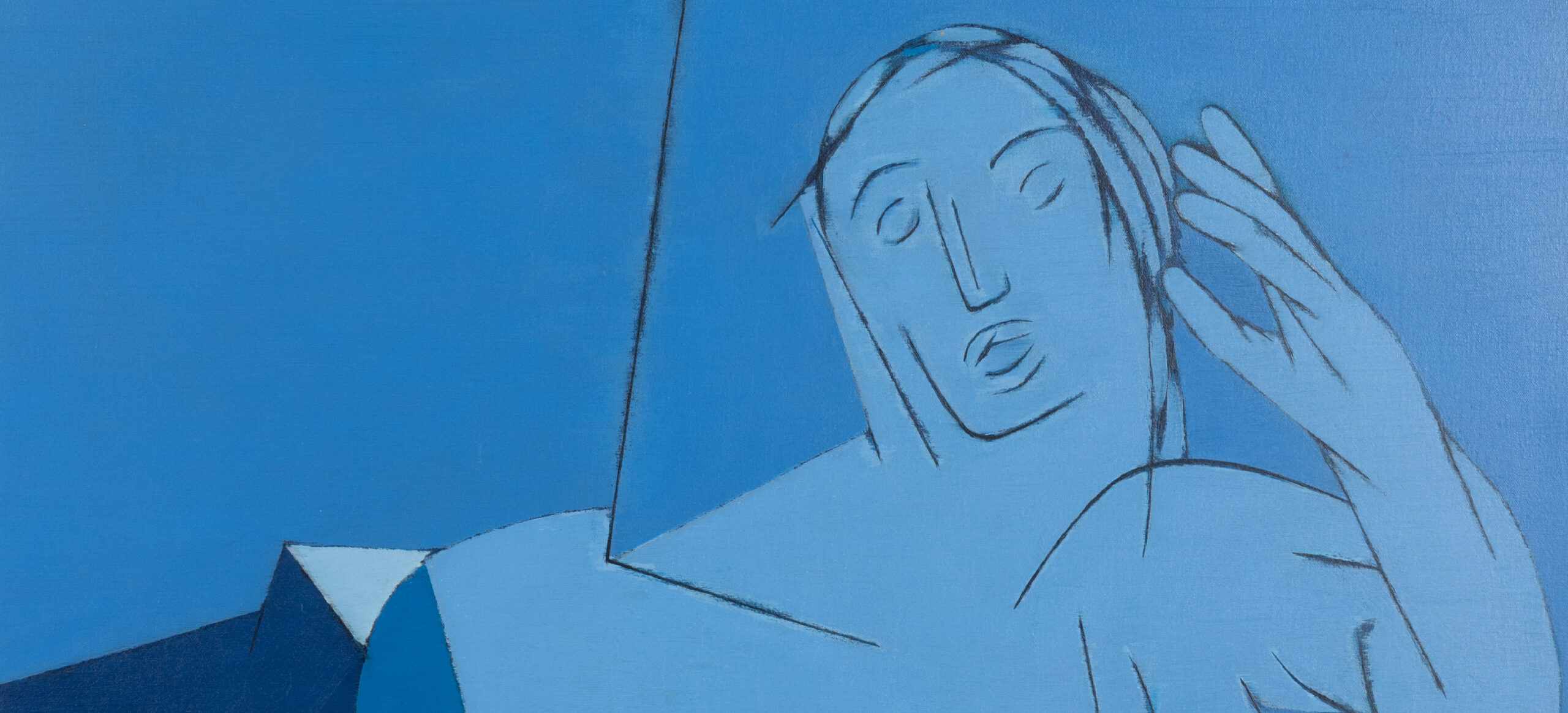
Presented in collaboration with the Tyeb Mehta Foundation and Saffronart Foundation, and curated by Roobina Karode, the exhibition is the first comprehensive retrospective of Mehta’s work. Expanding on a prelude at ART MUMBAI 2025, the exhibition at KNMA Saket brings together over five decades of the artist’s practice.
The exhibition features more than 120 works, including paintings, drawings, sculptures, film, and archival material, tracing the evolution of Mehta’s visual language. Known for his stark compositions and charged figuration, Mehta explored themes of conflict, vulnerability, and transformation, reflecting the social and psychological tensions of post-Independence India.
Born in 1925 in Kapadvanj, Gujarat, Mehta’s early exposure to cinema shaped his understanding of visual storytelling. After studying at the Sir J. J. School of Art in Bombay, he developed a formal vocabulary defined by compression, fragmentation, and spatial tension. His association with the Progressive Artists’ Group contributed to the emergence of a modern artistic language in India during a period of cultural transition.
The exhibition brings together key series including Falling Figure, Falling Bird, Mahishasura, Kali, Bull, and the Diagonal. Across these works, Mehta returned to recurring motifs that examined violence, rupture, and endurance. The image of the bull, first drawn from his observations at the Bandra abattoir in the 1950s and revisited throughout his career, became a persistent symbol within his practice. Mythological subjects such as Kali and Mahishasura are reinterpreted through contemporary visual forms, while several works reflect memories of displacement and unrest following the Partition of India.
Also included is Mehta’s short film Koodal (1970), which extends his exploration of existential cycles through moving image. Produced by the Films Division of India, the film examines intersections between humans, animals, and deities, reflecting on coexistence and transformation.
Archival material including early studies, notebooks, photographs, and exhibition documentation provides insight into Mehta’s creative process and working methods. Together, the exhibition presents a focused view of an artist who reshaped the language of modern Indian painting.
 KNMA, New Delhi